How do intravenous immunoglobulins (IVIG) impact neurological and cognitive functions in patients with PANS?
Summary
The acute-onset pediatric neuropsychiatric syndrome (PANS) is defined by the acute onset of various neuropsychiatric manifestations, presumably in the context of underlying immune dysfunction.
Standardized neuropsychological testing was used to evaluate how intravenous immunoglobulins (IVIG) impact neurological and cognitive functions in patients with PANS by comparing pre-treatment to post-treatment scores.
A 5-year retrospective study was conducted at the University of Arizona Childhood Postinfectious Autoimmune Encephalopathy Center. We identified 12 children diagnosed with PANS and treated with immunomodulatory doses of IVIG, who also underwent neuropsychological testing before and after treatment.
Multiple patient characteristics, type/schedule of testing, and number of IVIG courses were tracked. A score change of 1 standard deviation in any domain/subdomain assessed was considered improvement.
Additionally, records were reviewed for laboratory signs triggering infection and immune dysfunction. There was improvement in 11/12 patients, in one or multiple domains/subdomains, regardless of the time between the onset of the disease and the start of IVIG (0 to 7 years). Participants received 1 to 7 IVIG courses.
The improvement was mainly observed in memory (58%), sensorimotor integration (37%) and visual motor (30%). In 5/12 patients we detected hypogammaglobulinemia requiring continuous IVIG replacement, one patient had isolated low IgA.
Just one patient had to discontinue IVIG treatment due to serious adverse effects. Standardized neuropsychological testing represents an important tool to objectively measure improvement in patients with PANS.
IVIG was well tolerated and showed efficacy in the vast majority of participants, regardless of time since disease onset, emphasizing the impact of immunomodulation on PANS. The significant presence of basal hypogammaglobulinemia in children with PANS emphasizes the presumed role of immune dysfunction in the pathogenesis of the disease.
Introduction
Pediatric autoimmune neuropsychiatric disorder associated with streptococcal infections (PANDAS) was initially identified in the 1990s, but a new and expanded definition was subsequently established in an attempt to capture a broader spectrum of neuropsychiatric disorders: «Acute onset pediatric neuropsychiatric syndrome» or PANS.
The diagnostic criteria for PANS included:
Acute onset of obsessive-compulsive disorder (OCD) or severely restricted eating
Manifestation of additional neuropsychiatric symptoms, with equally dramatic onset (i.e., anxiety, depression, aggressive/oppositional behaviors, developmental disorders).
Worsening of school performance.
Sensory or motor dysfunction.
Sleep or continence disorders.
These varied and expanded characteristics of PANS and PANDAS have been confirmed by other groups over time. (3–5).
The etiology of this multifaceted disorder is not yet fully clarified, but there is a growing body of data, especially in the last decade, suggesting that abnormal immune system function could play an important role in this disease.
Given the multitude of symptoms, complex presentation, relapsing-remitting course, and unclear etiology of the disorder, the diagnosis of acute-onset pediatric neuropsychiatric syndrome remains challenging.
Guidelines including behavioral, immunomodulatory, and infection prevention guidelines were published in 2017 to help navigate therapeutic efforts. Evaluation of immunomodulatory interventions in patients with PANS remains of great importance, as the underlying immune dysfunction is believed to have a significant impact on the development of PANS.
Intravenous immunoglobulins (IVIG) have been investigated in randomized controlled trials that generally favored IVIG over placebo.
More recently, an open-label study showed an unequivocal benefit of immunomodulatory IVIG therapy in children with PANS, with a statistically significant reduction in symptoms, including OCD, overall clinical severity, and parental concerns.
Additionally, some studies have shown increased patient and parent satisfaction after IVIG treatment, indirectly suggesting better patient outcomes.
Given the limited but reassuring data on the efficacy of IVIG immunomodulation in patients with PANS, we aimed to expand existing knowledge on this topic by providing a quantifiable objective assessment of outcomes after IVIG treatment by comparing neuropsychological scores. before and after treatment.
Methods
A retrospective record review was conducted in the University of Arizona Childhood Postinfectious Autoimmune Encephalopathy (CPAE) Center of Excellence, after the approval of the Institutional Review Board (IRB). Patients with a diagnosis of PANS were evaluated in the CPAE Center from 2017 to 2022.
In addition to the diagnosis of PANS, other inclusion criteria consisted of treatment with immunomodulatory doses of IVIG and performance of neuropsychological tests before and after treatment.
Patients who did not require IVIG therapy or who did not complete pre- and post-treatment neuropsychological evaluation were excluded.
Patient characteristics, such as age, sex, PANS onset age, state of residence heyapplied therapeutic interventions, were noted by reviewing records.
Additionally, the records of children included in the study were investigated for any laboratory determinants of immunodeficiency or other immune dysfunction, as well as structural or inflammatory changes reported on magnetic resonance imaging (MRI) analyzes of the brain and cerebrospinal fluid. (CSF).
All patients met the criteria for the diagnosis of PANS. The decision to initiate treatment with IVIG was made based on the persistence or worsening of symptoms, despite treatment with other anti-infective and/or anti-inflammatory therapeutic modalities:
Nonsteroidal anti-inflammatory drugs (NSAIDs)
Antibiotics (therapeutic or immunomodulatory/prophylactic)
Systemic steroids.
To better evaluate the risks and tolerability of immunomodulation with IVIG, we tracked the dose and number of IVIG cycles, as well as any reported adverse events.
Neuropsychological evaluations
Patient testing was performed by licensed clinical psychologists (located in the patient's area of residence).
A variety of standardized test batteries appropriate for neuropsychological testing in children and adolescents were used.
This included the Kaufman Brief Intelligence Test, second edition (KBIT-2) as an independent test at the beginning of clinical development, as well as other more complete evaluations.
Comprehensive intellectual and cognitive testing included Wechsler Abbreviated Scale of Intelligence, Second Edition (WASI-2) and the Wechsler Intelligence Scale for Children, Fourth or Fifth Edition (WISC-4 or 5).
Memory was assessed using a Wide Range Assessment of Memory and Learning, Second Edition (WRAML-2) and the California Verbal Learning Test for Children (CVLT-C).
They used the Wide Range Achievement Test, Fourth or Fifth Edition (WRAT-4 or 5), and the PWechsler Individual Achievement Test, Third Edition (WIAT-3) as a tool to evaluate general learning achievements.
Visuomotor integration was assessed using Beery-Buktenica Visual Motor Integration Developmental Test (Beery VMI).
Additionally, visuomotor, visuospatial, and fine motor skills were assessed using a Broad Visual Motor Skills Assessment (WRAVMA) Pegboard.
The type of neuropsychological test was noted, as well as the delay between the first cycle of IVIG and the pre- and post-test, and each patient's scores were compared before and after treatment, if the same testing tool was used in both evaluations. .
For the purposes of this retrospective study, the authors chose to define improvement as a positive change of 1 standard deviation in any area tested or a subsection of the test.
Analysis
Descriptive statistical methods were used to calculate, analyze and present the data.
Results
Through a retrospective chart review, 12 consecutive patients were identified, all of whom qualified for the diagnosis of relapsing-remitting PANS and who were treated with immunomodulatory doses of intravenous immunoglobulins. Half of the patients were Arizona residents.
There was a slight female predominance of 58% in the group. Laboratory signs of active streptococcal infection were observed (throat swab removal during suspected illness) or previous exposure [elevated antistreptolysin-O (ASO) titers] in 7 patients, of whom 2 had other possible triggers/exposures in the same time period: one with influenza infection detected in several family members and one with whooping cough in the grandmother.
The remaining 5 patients had symptoms of infectious diseases without a recognized microbial agent. (Not everyone was tested for strep infections when they had symptoms.).
The average age at diagnosis of PANS was 8,5 years with a mean delay from diagnosis to IVIG treatment of 3 years, although almost half (5/12) of patients received IVIG within 2 years of diagnosis.
The maximum delay between PANS diagnosis and IVIG treatment was 7 years in 1 patient. These delays were a consequence of different reasons, some of which included late diagnosis, worsening severity/control of symptoms with other treatments, and occasionally occurred before evaluation in the CPAE Center at the University of Arizona.
Most patients were treated with 3 consecutive monthly cycles of IVIG to 2g/kg each.
The number of treatments varied between 1 and 7 cycles, which depended on the adverse events experienced. (leading to a decrease in the number of cycles or, in case of continued improvement in patients with severe symptoms, additional cycles).
Time between pre-treatment and post-treatment neuropsychological tests with IVIG.Characteristics of the patients.
Only one patient had to discontinue treatment due to serious adverse effects (AEs), as he developed symptoms suggestive of aseptic meningitis with the first dose of IVIG.
An additional 3 patients reported milder AEs: 2 patients had headaches and one had nausea, neither of which were severe enough to require discontinuation of treatment.
Patients qualified for IVIG treatment based on failure to improve on one or several other treatment modalities, such as anti-infective and/or anti-inflammatory medications: NSAIDs, antibiotics (therapeutic or immunomodulatory/prophylactic) and systemic steroids.
Eleven patients (92%) were treated without success with all three types of treatment (antibiotics, NSAIDs and prednisone) before starting IVIG cycles, while the remaining child received antibiotics and steroids.
These treatments were not continued during IVIG therapy. Patients were also treated with a variety of psychiatric and other medications, as well as non-pharmacological interventions before (and they continued in parallel) with IVIG, as shown in Table 2.
We are aware that these interventions are very important for many aspects of health and for disease control. However, IVIG is believed to have had the greatest impact on improvements in the areas of neuropsychological functioning that were the focus of this study, given that patients still suffered from notable signs and symptoms of PANS despite all other treatments used, before receiving IVIG.
The authors are unaware of any relevant external factors that would have had a notable influence on the reported recovery.
Medications with which patients were treated before (or during) IVIG treatment.
After IVIG treatment, the vast majority of patients experienced some beneficial effects. Pretreatment testing was performed at a wide range of intervals, averaging 72 days. Post-treatment testing was performed on average 99 days after the first IVIG cycle (ED was 69 days) and the maximum delay was 218 days in a patient who received 4 IVIG treatments.
Two patients were evaluated with KBIT-2 and both had a relevant improvement (+1SD) in the post-treatment evaluation.
The remaining 10 patients were evaluated with various combinations of neuropsychological tests to assess cognition, memory, intelligence, integration, and other areas of functioning.
Unfortunately, the same combination of assessments was not performed in all patients, and in some children different tests were used to assess the same area of functioning before and after treatment.
50% of patients evaluated with multicomponent testing experienced improvement in 2 or 3 of the areas evaluated and another 40% achieved improvement in one of the domains evaluated.
The positive effects of IVIG were mainly manifested in the increase in memory (58% or 5/9 patients evaluated), followed by sensorimotor and visuomotor integration (significant changes were observed in the 37% and 30% of the evaluated patients, respectively).
Individual results of each patient after treatment with IVIG.
The data did not demonstrate that the delay from PANS diagnosis to IVIG treatment negatively impacted the desired effects of immunomodulation, as both patients who received IVIG within 2 years of diagnosis and those who had a longer delay experienced comparable benefits.
Interestingly, the only patient who did not experience a significant response to IVIG and the two who benefited the most (by showing improvement in 3 areas) received treatment within one year of PANS diagnosis.
The records were searched for laboratory signs of abnormal immune system function, with notable findings of hypogammaglobulinemia in half of the patients:
1 had isolated low IgA and 5 had low IgG requiring continuous IVIG replacement.
Brain MRI was completed in five patients before initiation of immunomodulatory treatment with IVIG and before establishing the diagnosis of PANS, within the initial evaluation of these patients to exclude other causes of disease symptoms.
Various MRI modalities were used, but there were no signs of inflammatory changes in any of the patients undergoing imaging.
Five patients underwent lumbar puncture and CSF analysis (before being evaluated at our center), all of whom showed normal routine cytology and biochemistry. Additionally, two had negative oligoclonal band testing, two had negative encephalitis panels, and one had normal CSF immunoglobulin levels.
Discussion
Acute-onset pediatric neuropsychiatric syndrome is a complex set of neuropsychiatric manifestations whose etiology has not yet been completely elucidated.
PANS remains a challenge to diagnose and treat. Given the variable presentation and relapsing-remitting course in some patients, objective confirmation and quantification of improvement represent the most important tasks for multidisciplinary teams that care for patients with this pathology.
Furthermore, limited data from few randomized controlled trials on the effectiveness of IVIG drive the effort to find ways to objectively evaluate outcomes to confidently recommend this therapeutic intervention.
Having a tool to measure the effect accurately and unbiased would allow evaluations and comparisons of different treatments, which would help in data-driven decision making and therapeutic guidelines for this complex disorder.
One trial successfully demonstrated measurable improvement in 21 patients with PANS who were treated with 6 cycles of 1 g/kg/dose IVIg every 3 weeks.
In comparison, most patients in the retrospective study herein received the same cumulative dose of intravenous immunoglobulins, but in 3 cycles (although patients received 1 to 7 cycles), also with notable benefits.
These two data sets, in addition to other previous publications that favored IVIG treatment over placebo and were (at least partially) blinded and randomized, demonstrate that IVIG is an important and effective therapeutic option for patients diagnosed with pediatric neuropsychiatric syndrome. acute onset.
Although a varying number of cycles and doses of immunoglobulins were used in all of these studies, IVIG still showed efficacy.
Furthermore, it could be argued that the Williams and Perlmutter trials would have shown a greater impact of IVIG on PANS/PANDAS symptoms if multiple cycles had been used, given that the cumulative dose in both trials was 2 g/kg administered for 2 days, and it did not recur.
This could potentially allow some flexibility in dosage and duration of treatment and lead to a more personalized approach to tailoring each patient's treatment plan.
Also, consistent use of periodic behavioral and neuropsychological testing can enable objective monitoring and quantification of progress between IVIG courses and guide decisions about next steps based on assessments of measurable outcomes.
We chose to use the first dose as the time point to calculate the interval to posttreatment testing for several reasons. Primarily, this decision is due to the fact that the original trials of IVIG therapy in PANS/PANDAS used a single dose of immunoglobulin and still showed improvement, suggesting that this impactful treatment may be effective even with a single dose and that this could potentially be the most effective dose.
Additionally, some of the patients in the group received a single dose of IVIG and improved, supporting this idea.
OCD is the most prominent and frequently defining characteristic of PANS and is the one that is mainly used as a measure of improvement in patients with this pathology.
However, PANS presents a wide range of other psychiatric and neuropsychological manifestations that sometimes even overshadow OCD.
This is why the study focused on additional relevant neuropsychological disorders commonly observed within the PANS spectrum and provided a novel and expanded view of the beneficial effects of IVIG compared to other trials.
General and parental clinical impressions are also commonly used in these trials as a measure of treatment success, but may not be specific enough (such as the Clinical Global Impression of Severity) and may be prone to bias in the case of questionnaires. parents.
Another rather subjective outcome measure for the treatment of acute-onset pediatric neuropsychiatric syndrome that has been reported in the literature and that has favored IVIG over other therapeutic approaches has been patient satisfaction.
Overall, the study is complementary to other trials and adds to the previously recognized positive impact that immunomodulation through IVIG infusions can have on a significant proportion of children suffering from PANS.
Hypogammaglobulinemia was detected in half of the study population, underscoring the importance of immune dysregulation in the etiology of acute-onset pediatric neuropsychiatric syndrome. Although humoral immunodeficiencies (ID) are the most common type of ID, this overrepresentation of hypogammaglobulinemia in the group could be a manifestation of a previously recognized and well-studied connection between immunodeficiency diseases and autoimmunity, although it may also be a reason for the that these patients were more susceptible to infections before the onset of PANS.
It can also be argued that the positive clinical responses of PANS patients to immunomodulatory interventions indirectly prove that immune dysfunction is a relevant basis for the development of acute-onset pediatric neuropsychiatric syndrome. Although the specific causes of hypogammaglobulinemia are not the focus of this study and there is no suspicion that it developed secondary to other therapies used to treat study participants. Even systemic steroids were used in the form of short bursts, which do not have a significant impact on immunoglobulin production.
The study has some limitations. It was conducted at a single center with a relatively small sample size (not surprising as this is a rare disorder) and a very heterogeneous population, so no generalizations or risk stratifications can be made. reliable way.
The lack of a control group prevented further assessment of the exact impact (and statistical significance) of IVIG in improving acute-onset pediatric neuropsychiatric syndrome, compared with the natural relapsing-remitting course of the disease and any effects of other ongoing pharmacological and non-pharmacological interventions that were used in these patients.
A uniform and standardized implementation of neuropsychological testing is needed, within our CPAE Center, but also nationally, to allow for greater data collection as well as comparison of results between patients and different centers, especially given the rarity of this disease. .
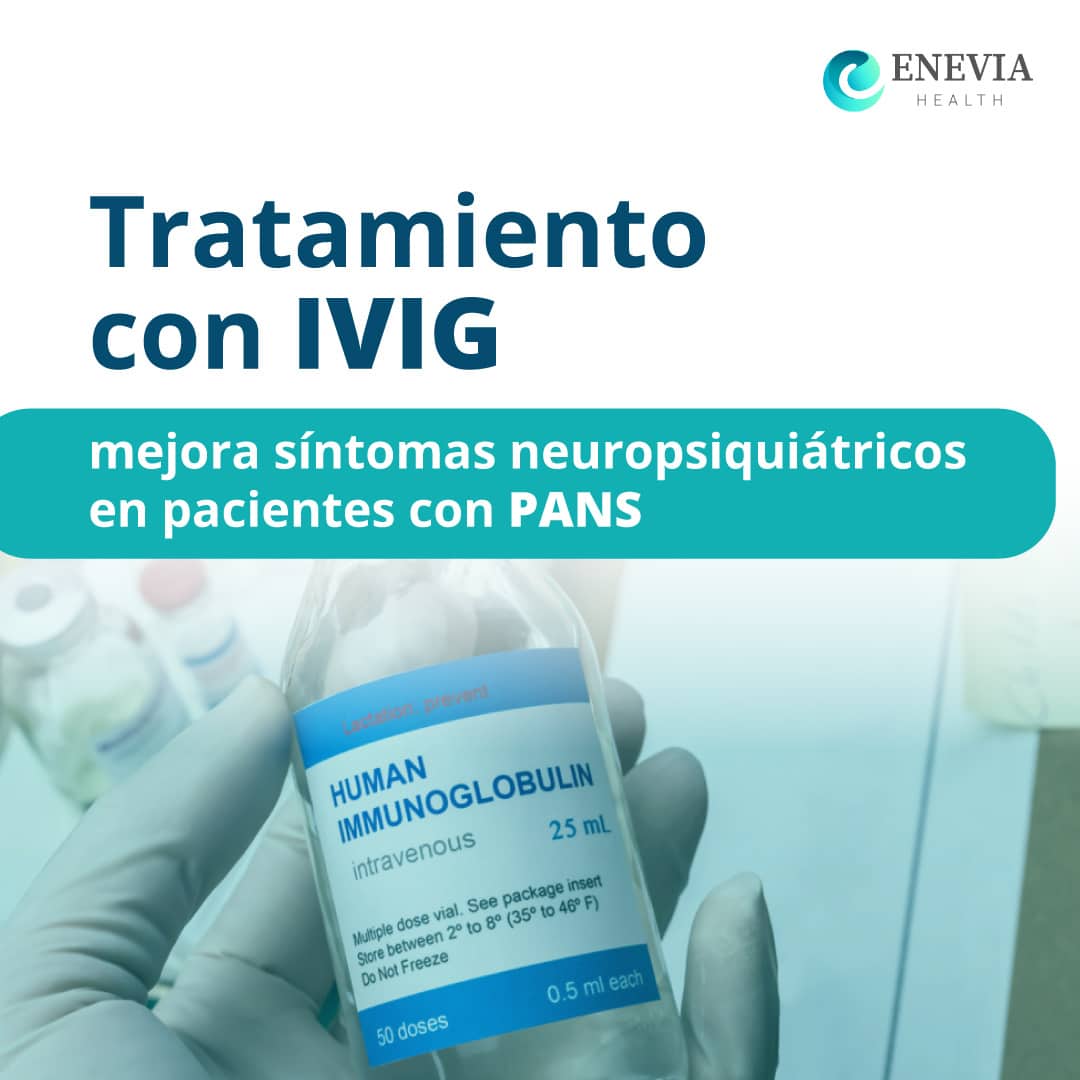
IVIG bottle for treatment used on patients.
The research continues. Stay tuned for new treatment options and advances for the recovery of those who face this pathology on our blog: https://test.eneviahealth.com/blog/
At Enevia we have the autoantibody test, which can help evaluate if there is an autoimmune disease that is attacking the brain, or indicate if there is an alteration in the genes of certain receptors or interleukins, which would require performing a complete exome.
We have both tests under medical prescription, so you can acquire the general or specialized medical consulting service, with doctors with a lot of experience in these areas and the willingness to provide you with personalized attention. Get them on our website: www.eneviahealth.com
We use cookies to optimize our website and our service.
Functional
Always active
The storage or technical access is strictly necessary for the legitimate purpose of allowing the use of a specific service explicitly requested by the subscriber or user, or for the sole purpose of carrying out the transmission of a communication through an electronic communications network. .
preferences
The storage or technical access is necessary for the legitimate purpose of storing preferences not requested by the subscriber or user.
Statistics
Storage or technical access that is used exclusively for statistical purposes.Storage or technical access that is used exclusively for anonymous statistical purposes. Without a requirement, voluntary compliance by your Internet Service Provider, or additional records from a third party, information stored or retrieved solely for this purpose cannot be used to identify you.
Statistical
Storage or technical access is necessary to create user profiles to deliver advertising, or to track the user across one or multiple websites for similar marketing purposes.
Our groups are the ideal platform to learn and share your scientific concerns about neurodevelopment issues
Group rules:
Be nice. Bullying, insults and personal confrontations are not allowed.
Respect everyone's privacy.
Use information that is as scientific and reliable as possible, cite sources.
We want to comply with WhatsApp rules and avoid topics that we know lead to the closure of groups, so we ask that these groups not discuss topics related to VACCINES, MMS, CDS.
*Our purpose is informational only, it is not intended to be a substitute for medical advice, diagnosis or treatment.