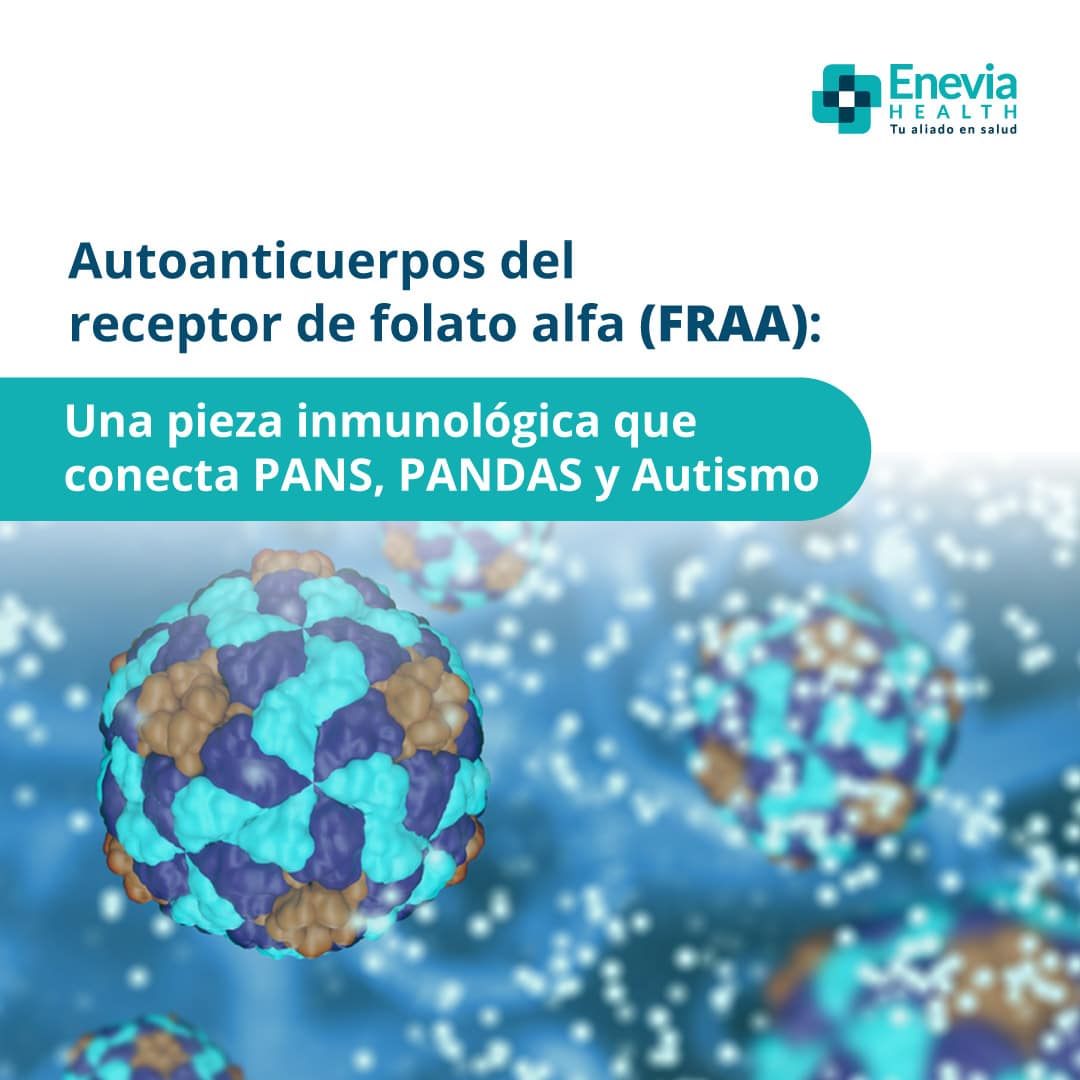
Folate receptor alpha autoantibodies: An immunological link between PANS, PANDAS, and autism
A look at the immunological root of pediatric neuropsychiatric disorders
For years, parents of children with PANS (Acute-Onset Pediatric Neuropsychiatric Syndrome) and PANDAS (Pediatric Neuropsychiatric Syndrome Associated with Streptococcal Infections) have sought answers to the same question:
Why did my son change so suddenly?
What begins as a seemingly infectious condition (tonsillitis, fever, or simple bacterial exposure) can transform within weeks into a whirlwind of symptoms: motor or vocal tics, extreme anxiety, behavioral regression, loss of language, irritability, obsessive-compulsive disorders, and even cognitive difficulties. The daily life of the entire family changes drastically.
Symptoms of PANDAS/PANS
Medicine has made progress in identifying these conditions as aberrant immune responses triggered by infections. However, a new piece has begun to fit into this complex puzzle: folate receptor alpha autoantibodies (FRAA).
The work of Lindsey Wells, Dr. Richard E. Frye, et al. has opened a new chapter in the understanding of these syndromes, showing that these autoantibodies are not only present in PANS and PANDAS, but can also connect these conditions with the Autism Spectrum Disorder (ASD).
The role of folate: an essential nutrient for the developing brain
The folate (vitamin B9) It's much more than a simple vitamin. Its role in the central nervous system is so fundamental that a deficiency during pregnancy can cause neural tube defects. In the developing brain and infant nervous system, it participates in essential processes:
Synthesis of neurotransmitters such as serotonin, dopamine and norepinephrine.
DNA methylation, which regulates gene expression and modulates neuronal functions.
DNA repair and maintenance of the immune system.
Myelin production, which covers and protects neurons.
Foods rich in Vitamin B9
To reach the brain, it must cross the blood-brain barrier. This transport is mediated primarily by the folate receptor alpha (FRα), a specialized protein located in the epithelium of the choroid plexuses.
When this receptor is functioning properly, folate reaches the cerebrospinal fluid and nourishes the nervous system. But when the immune system attacks it, everything changes.
FRAA: When the immune system blocks the folate pathway
The folate receptor alpha autoantibodies (FRAA) They are proteins produced by the immune system that, instead of protecting the body, They attack the receptor that transports folate to the brain. This can lead to a condition known as cerebral folate deficiency (CFD), even when blood folate levels are normal.
There are two main types of FRAA:
Blockers: directly interfere with the binding of folate to the receptor, preventing its transport to the central nervous system.
Of union: They bind to the receptor, marking it as “foreign” and triggering an immune response.
The presence of these autoantibodies can be devastating to a developing brain. Studies have shown that CFD is associated with language delays, cognitive impairment, autism, epilepsy, sleep disorders, and, as we now know, with neuropsychiatric syndromes such as PANS and PANDAS.
Graphical representation of autoantibodies
PANS, PANDAS, and FRAA: The immunological connection that changes the clinical approach
Traditionally, PANS and PANDAS were considered disorders triggered by infections (streptococcal or others) that triggered an autoimmune response directed at the brain, especially the striatum.
The novelty of the research led by Wells and Frye is that it shows that The presence of FRAA in these patients could act as a second immunological blow, amplifying the damage or even predisposing the brain to overreact to common infections.
Some of the most relevant findings include:
A high percentage of children diagnosed with PANS/PANDAS present elevated levels of FRAA, compared to healthy controls.
Children with positive FRAA tend to present more severe symptoms, including language regression, persistent tics, and treatment-resistant behavioral disturbances.
The co-occurrence of FRAA and autism in families with a history of PANS/PANDAS suggests that these antibodies could represent a shared immunological pathway between both disorders.
In some cases, neuropsychiatric symptoms decrease with treatments aimed at correcting brain folate deficiency, such as folinic acid supplementation.
A look beyond genetics: the role of immunity in neurodevelopment
For a long time, autism has been understood primarily from a genetic perspective. However, studies like this one open the door to a broader paradigm, where Inheritable or acquired immunological factors play a key role in neurological development.
Research on FRAA suggests that:
Not all cases of autism or PANS/PANDAS have an exclusively genetic origin. Immune, environmental, and metabolic factors may interact with genetics to influence the onset and progression of the disorder.
The presence of FRAA may be heritable, with correlations observed between mothers and children. This suggests that the risk can be transmitted between generations, even without genetic changes.
The progressive accumulation of these autoantibodies over generations could explain why some families present higher incidence or severity of TEA or PANS/PANDAS.
Clinical implications: how the diagnostic and therapeutic approach changes
The findings of this study have a profound impact on how we address these disorders. It's no longer just about controlling infections or modulating the immune response: it's necessary assess and address underlying factors that alter the neurological environment.
1. More complete and individualized diagnosis
Including FRAA measurement in the evaluation protocol allows us to understand whether there is an additional immunological component affecting neurological development. This provides valuable information for personalizing treatment.
2. Specific therapeutic interventions
Studies have shown that the use of folinic acid (leucovorin) It may improve symptoms in FRAA-positive patients by overcoming receptor blockade and restoring folate transport to the brain. Observed benefits include:
Improvements in language and communication.
Decrease in repetitive behaviors and tics.
Reduction of obsessive-compulsive symptoms.
Advances in cognitive and social skills.
Leucovorin (Folinic acid)
3. Prevention and early detection
The detection of FRAA in parents before pregnancy or in early stages of pregnancy could become a powerful preventive tool, especially in families with a history of autism or PANS/PANDAS.
The bridge between PANS/PANDAS and Autism: a common immunometabolic axis
Perhaps one of the most revealing aspects of Wells and Frye's study is how PANS, PANDAS, and autism may share common immunological ground.
All these paintings present:
Immune dysregulation, with autoantibodies directed at the central nervous system.
Chronic inflammatory processes, often exacerbated by infections or intestinal dysbiosis.
Metabolic disorders, such as inefficient transport of folate to the brain.
Impact on neurodevelopment, manifested in language, behavior, sociability and executive function.
This implies that we are not facing isolated diseases, but rather different manifestations of the same immunometabolic imbalance, in which FRAAs can play a central role.
The FRAT test: a key tool that could help understand immunological risk
Measure both autoantibodies blockers like the of union.
To determine whether folate transport to the brain could be compromised.
Guide therapeutic decisions, such as folinic acid supplementation.
Evaluate the risk in families with a history of ASD, PANS, or PANDAS even before pregnancy.
In the clinical context, the FRAT has become a crucial immune marker which can complement traditional genetic and neurological tools, offering a more complete view of the patient's condition.
Recommendations for families with children diagnosed with PANS/PANDAS
If your child has been diagnosed with PANS or PANDAS, or has symptoms consistent with these conditions, consider these steps:
Request FRAA assessment through the test FRAT. This would allow us to determine if there is a blockage in the transport of folate to the brain.
Consult with specialists: A comprehensive approach may include nutritional interventions, immunomodulatory therapies, and neurological support.
Evaluate the entire family: Since these autoantibodies can be inherited, it is important to consider the immune status of the parents, especially if they are planning future pregnancies.
Monitor clinical progress: If folinic acid supplementation is started, keep a detailed record of behavioral, linguistic, and cognitive changes.
Integrate the approach with complementary therapies: Behavioral interventions, speech therapy, sensory therapies, and psychological support can enhance outcomes.
Towards more precise and preventive medicine
Science is revealing that behind many neurodevelopmental disorders there is complex interactions between genetics, immunity and metabolism.
The discovery of the relationship between FRAA and PANS/PANDAS Not only does it change the way we understand these syndromes, but it also paves the way for earlier, more personalized, and potentially more effective interventions.
For many families, the diagnosis of PANS or PANDAS has been a point of uncertainty. Today, research offers hope: if we understand and treat the underlying immunological causes, Diagnosis and treatment could be improved, thus improving the lives of affected children..
Conclusions
The folate receptor alpha autoantibodies (FRAA) are strongly associated with PANS, PANDAS and autism.
These antibodies can block the transport of folate to the brain, causing cerebral folate deficiency and affecting neurological development.
Their presence can be inherited and increase with each generation, making them a non-genetic risk factor.
Detect them by means of the test FRAT could allow for preventive and therapeutic strategies, such as folinic acid supplementation.
Early identification could change the course of these disorders, improving prognosis and offering new opportunities for intervention.
On Enevia Care, we believe that understanding the immune system is key to transforming the future of children with PANS/PANDAS and/or Autism.
For this reason, we put at your disposal the test FRAT, an essential tool that could help you identify the presence of autoantibodies against the folate receptor alpha and guide personalized clinical decisions.
We use cookies to optimize our website and our service.
Functional
Always active
The storage or technical access is strictly necessary for the legitimate purpose of allowing the use of a specific service explicitly requested by the subscriber or user, or for the sole purpose of carrying out the transmission of a communication through an electronic communications network. .
preferences
The storage or technical access is necessary for the legitimate purpose of storing preferences not requested by the subscriber or user.
Statistics
Storage or technical access that is used exclusively for statistical purposes.Storage or technical access that is used exclusively for anonymous statistical purposes. Without a requirement, voluntary compliance by your Internet Service Provider, or additional records from a third party, information stored or retrieved solely for this purpose cannot be used to identify you.
Statistical
Storage or technical access is necessary to create user profiles to deliver advertising, or to track the user across one or multiple websites for similar marketing purposes.
Our groups are the ideal platform to learn and share your scientific concerns about neurodevelopment issues
Group rules:
Be nice. Bullying, insults and personal confrontations are not allowed.
Respect everyone's privacy.
Use information that is as scientific and reliable as possible, cite sources.
We want to comply with WhatsApp rules and avoid topics that we know lead to the closure of groups, so we ask that these groups not discuss topics related to VACCINES, MMS, CDS.
*Our purpose is informational only, it is not intended to be a substitute for medical advice, diagnosis or treatment.