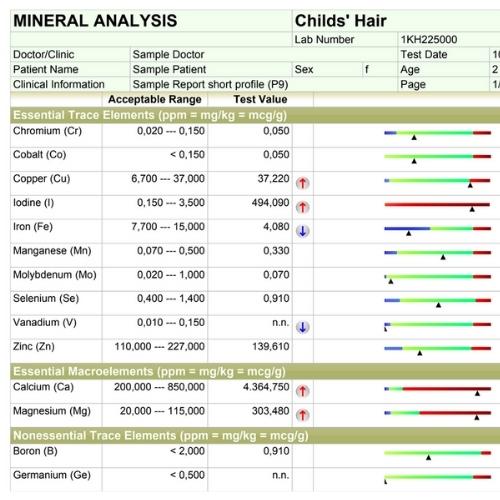
Hair mineralogram:
Hair is the ideal medium for measuring toxic metals and essential elements, because it is the only one that "stores" elements for long periods. As it grows, the root is nourished by blood vessels, and this blood carries the toxic and essential elements present in the body. These elements are then incorporated into the proteins of the growing hair. The hair, when storing them, is a good reflection of the concentration of the different elements in the body.
An alternative to hair, nail analysis:
Nails are mainly made up of a tough protein called keratin. Like hair and teeth, they are an appendage of the skin. These tissues accumulate metals that circulate through the bloodstream. Due to their growth patterns, both hair and nails reveal past or chronic exposure to minerals.
Physiologically, the nails can record the history of recent imbalances. As the American Academy of Dermatology points out on its website, nails have been used as a diagnostic tool since ancient times. By analyzing the nails, nutritional deficiencies, reactions to drugs or intoxications can be detected. Analysis of minerals in the nails reveals toxic exposures that occurred during the growth period.
Why are there metals in the blood?
The blood is a transport system that supplies the tissues with minerals and trace elements, including toxins. Metals circulate in the blood for approximately 72 hours, after which they are naturally eliminated or deposited in various body tissues.
High levels of metals in the blood are an indication of immediate exposure to them and of acute poisoning.
Decreased concentrations of essential minerals and trace elements reflect inadequate intake and may indicate nutritional deficiency.
You can choose whether to scan 35 items or 55 items:
The 35 elements analyzed are: Aluminum, Antimony, Arsenic-total, Barium, Beryllium, Bismuth, Boron, Cadmium, Calcium, Zinc, Zirconium, Cobalt, Copper, Chromium, Tin, Strontium, Germanium, Iron, Lithium, Magnesium, Manganese, Mercury, Molybdenum, Nickel, Palladium, Silver, Platinum, Lead, Selenium, Thallium, Titanium, Tungsten, Uranium, Vanadium, Iodine.
The 55 elements analyzed are: Aluminum, Antimony, Arsenic-total, Barium, Beryllium, Bismuth, Boron, Cadmium, Calcium, Zinc, Zirconium, Cobalt, Copper, Chromium, Tin, Strontium, Germanium, Iron, Lithium, Magnesium, Manganese, Mercury, Molybdenum, Nickel, Palladium, Silver, Platinum, Lead, Selenium, Thallium, Titanium, Tungsten, Uranium, Vanadium, Iodine. Cerium, Cesium, Dysprosium, Erbium, Europium, Gadolinium, Gallium, Iridium, Ytterbium, Lanthanum, Lutetium, Praseodymium, Rhenium, Rhodium, Ruthenium, Samarium, Tantalum, Tellurium, Thulium, Thorium.