Neurodevelopmental disorders are a broad group of motor, communication, cognitive, psychological and/or sensory disorders; and that manifest themselves at some point in development. Examples of these are autism, attention deficit, learning disorders, mental retardation, language development disorders, etc. These disorders have serious individual, family, health and socioeconomic consequences.
When we talk about environmental toxins that affect neurodevelopment we are referring to all harmful substances in the environment that can negatively affect the development of the nervous system in humans, particularly in babies and young children. These toxins can come from various sources, such as air pollution, water pollution, pesticides, heavy metals, and industrial chemicals. Exposure to these toxins during critical periods of neurodevelopment can lead to a variety of neurological disorders and developmental delays.
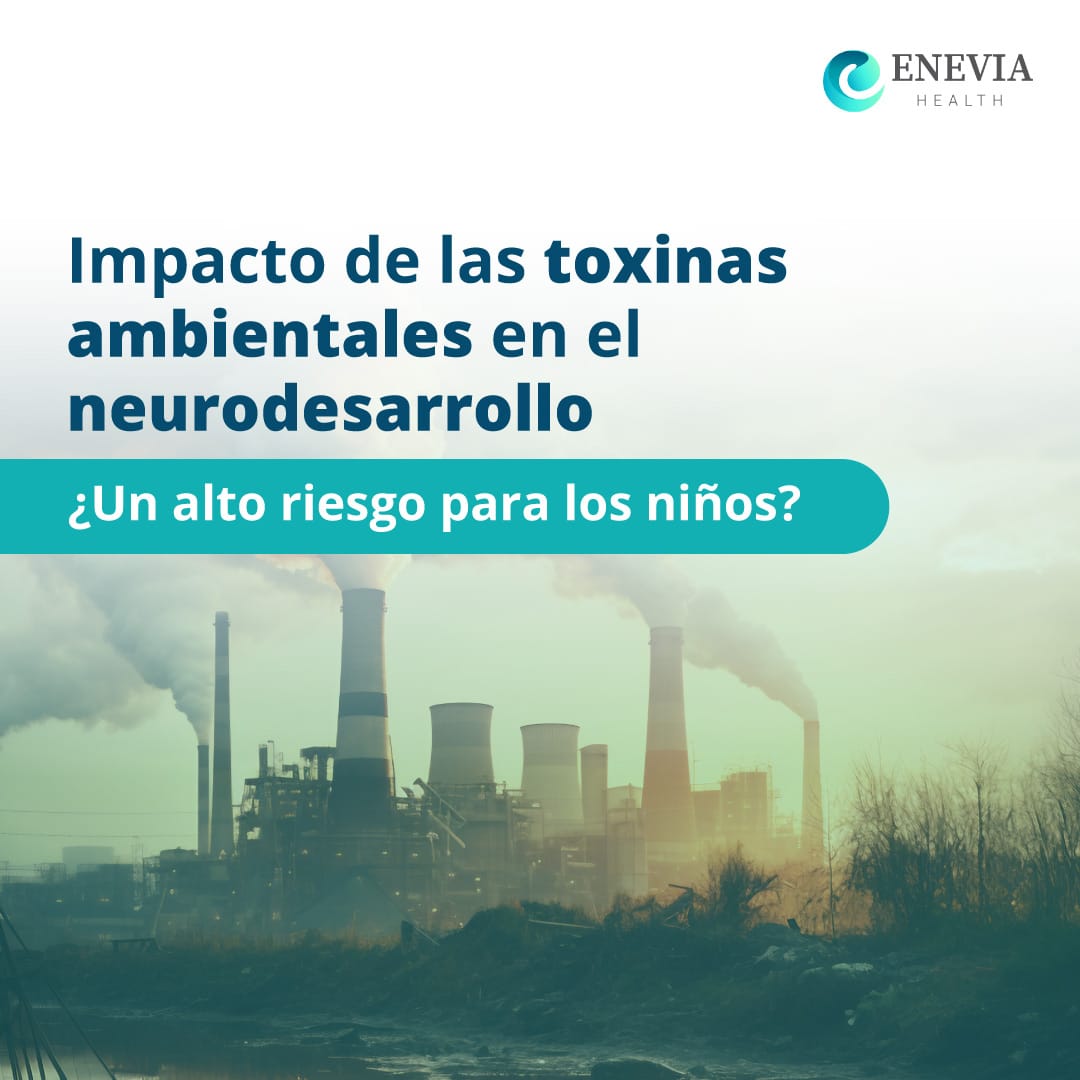
Factory and environmental toxins
Prevention is key since they are preventable causes, that is, they are modifiable factors that can create damage to our development and that of future generations. Environmental toxins are one of the etiological agents that generate a high rate of learning, behavioral and neurodevelopmental disorders in children. They are clearly the result of complex interactions between environmental factors (physical, chemical, biological, psychological and social) and genetics during vulnerable periods of neurodevelopment.
When we refer to the human body, we must understand how our internal environment and external environment work. The human body has three protective barriers against external environmental pollutants.
The skin, which protects the body from contaminants outside the body.
The gastrointestinal system, which protects the inside of the body from ingested contaminants (toxins).
The membranes inside the lungs, which protect the inside of the body from inhaled pollutants.
Risk factors for environmental toxins on the skin
Factors that affect the skin absorption of toxic substances include:
The condition of the skin: The intact stratum corneum (epidermis) is an effective barrier against the absorption of some toxic chemicals. However, physical damage to the protective barrier, such as dehydration, cutting or abrasion, allows toxic substances to penetrate the epidermis and enter the dermis where they are more easily introduced into the bloodstream and transported to other parts of the body. body.
The chemical makeup of the substance: Inorganic chemicals are not easily absorbed through healthy, intact skin (such as cadmium, lead, mercury, and chromium). Organic chemicals dissolved in water do not penetrate the skin easily because the skin is impermeable to water. However, organic solvents, such as paint thinner or gasoline, are easily absorbed through the epidermis.
Increasing the concentration of the toxic substance or the time of exposure increases the rate or amount of material absorbed.
In the respiratory tract
Inhalation is the easiest and fastest means of exposure to toxic substances because these substances are easily absorbed into the respiratory system. The lining of the respiratory system is not effective in preventing the absorption of toxic substances into the body. The respiratory system includes the upper airways (nasal passages, larynx, pharynx) and the lower airways (trachea, bronchi, bronchioles, and alveoli). The following factors affect the inhalation of toxic substances:
The concentration of toxic substances in the atmosphere.
The solubility of the substance in the blood and tissues.
The respiratory rate.
The duration of the exposure.
The state of the respiratory system.
The size of the toxic particle.
The digestive system
Ingestion of toxic substances is generally accidental or inadvertent. Our digestive system is comprised of the mouth, esophagus, stomach, small intestine and large intestine. The main function of the digestive system is to digest and absorb the food we eat. The absorption of toxic substances is affected by physical and chemical factors such as the structure of the body and the length of time that foods containing the substances remain in the body.
Once a chemical substance is absorbed, its effects depend on the concentration in the affected organs, its chemical and physical form, what happens after absorption, and how long the substance remains in the tissue or organ. affected. After the chemical is absorbed into the blood, it is distributed throughout the body immediately; It is transferred from one organ or tissue to another or transformed into a new compound (metabolization).
Other routes of exposure
The transplacental route and breast milk are other routes of exposure for children, so they affect the child at a crucial stage.
Neurotoxic substances or toxins
They are all those substances that can cause any of the following effects:
Learning disorders.
Maturational delay.
Autism spectrum disorders.
Behavior problems.
Attention deficit and hyperactivity.
Nausea.
Dizziness
Vertigo
Irritability.
Euphoria.
Lack of coordination of movements.
Memory and behavioral alterations.
Alterations of the peripheral nerves.
Symptoms of environmental toxins in children
These substances directly or indirectly interfere with neurodevelopment processes; for example, they can accelerate, delay, and alter myelin formation processes during the neurodevelopment period. In this sense, it must be taken into account that there are critical periods of vulnerability where exposure can have a lifelong impact on brain function.
Currently, thousands of chemicals are available on the market, more than 100 thousand in the European Union and more than 80 thousand in the United States. Of which less than half were subjected to toxicity evaluation tests.
In their 80% there is no information available about the effects that these substances could have on the development of the child's brain.
Chemical contamination
Five products (lead, arsenic, polychlorinated biphenyls) and solvents such as toluene have known neurotoxicity that affects development. Three others (manganese, fluorides and perchlorates) are suspected of causing memory problems, behavioral disorders and intellectual delays.
Polluting chemical compounds
Lead
One of the most well-known environmental toxins that can affect neurological development is lead. Lead exposure has been linked to cognitive impairments, behavioral problems, and learning difficulties in children. It can enter the body through contaminated water, lead-based paint, and industrial emissions. Even low levels of lead exposure can have detrimental effects on the developing brain, which has long-term consequences for cognitive function and behavior.
Arsenic
It is an element increasingly identified, especially in well water from soils with a high content of it that is mobilized to groundwater. Chronic digestive exposure through ingestion through water is associated with a wide variety of adverse effects, including cancer.
Radon
It is a radioactive gas that comes from the natural decay of uranium. It is an element found in almost all soils; It enters the home through construction materials or water, contaminating the air we breathe.
Ethanol
In addition to being used for culinary purposes, which has adverse effects when ingested, ethanol is widely used in many industrial sectors and in the pharmaceutical sector, as an excipient in some medications and cosmetics. It is a good solvent, and can be used as an antifreeze. It is also a disinfectant. Its greatest bactericidal potential is obtained at a concentration of approximately 70%.
Mercury
Another important environmental toxin is mercury, which is commonly found in fish and dental fillings. Prenatal exposure to mercury has been associated with impaired cognitive function, attention deficits, and language delays in children.
Pesticides
They are synthetic chemicals, product and byproduct of human activity. They are ubiquitous and are found in surface and drinking water, in food as residues derived from the use of pesticides in contaminated soil.
They are concentrated in the fatty tissue of animals and in the eliminated fatty products (red meat, fish and dairy products).
They are carcinogenic, alter the functioning of the immune system, affect the reproductive system, and cause neurodevelopmental disorders. They cross the placenta, so exposure is present from conception.
Toluene
It is added to fuels (as an antiknock agent) and as a solvent for paints, coatings, rubber, resins, a diluent in nitrocellulose lacquers and in adhesives and in the manufacture of dyes. Toluene is the starting product in the synthesis of TNT (2,4,6-trinitrotoluene), a known explosive.
PCBs
Additionally, exposure to industrial chemicals such as polychlorinated biphenyls (PCBs), bisphenol A (BPA), and phthalates has been associated with neurodevelopmental abnormalities. These chemicals are commonly found in plastics, food packaging, and household products.
Prenatal exposure to these chemicals has been linked to impaired cognitive function, attention deficits, and behavioral problems in children. This compound can enter our body through the respiratory system, the skin and the gastrointestinal system, reaching the bloodstream and from there to our brain, causing damage to the structures of our brain and affecting neurological functions.
Air pollution
Air pollution is another important environmental toxin that can affect neurological development.
Environmental toxins in the air
Particulate matter, nitrogen dioxide, and other air pollutants have been linked to adverse effects on children's cognitive function, behavior, and brain structure. Studies have shown that children who live in areas with high levels of air pollution are at increased risk of developing neurodevelopmental disorders.
Crucial stages for neurodevelopment
The developing brain is particularly vulnerable to environmental toxins due to its rapid growth and high metabolic activity. During critical periods of neurodevelopment, exposure to these toxins can disrupt the formation of neural circuits, disrupt neurotransmitter function, and interfere with normal brain development processes. This can lead to a wide range of neurodevelopmental disorders, including intellectual disabilities, learning difficulties, and behavioral problems.
It is important to note that the effects of environmental toxins on neurodevelopment are not limited to individual exposure. There is increasing evidence that prenatal and early-life exposure to these toxins can have transgenerational effects and affect the neurological development of future generations. This highlights the need for comprehensive strategies to reduce environmental toxins and protect the developing brain from damage.
Therefore, it is important to note that there is a difference between adults and children; exposure to neurotoxic chemicals from prenatal periods are windows of vulnerability in critical periods where the organogenesis and histogenesis of the brain can affect the child suffering from alterations. in brain function for life or who show a decrease in their abilities from the moment of exposure until adulthood.
Types of exposure to toxins
The exhibition can be classified into:
Sharp.
Chronicle.
Sub-acute.
Sub-chronic.
Metabolism and excretion of toxins
The speed at which our body eliminates toxins will depend mainly on the health of our liver and kidneys. The longer this toxin circulates in the bloodstream, the greater the harmful effects will be on our health.
The main way to metabolize toxins is through the liver. Our liver is responsible for separating large molecules into simpler molecules so that our kidneys can excrete them.
The liver is also responsible for part of the excretion through the bile, for example, lead or pesticides, when excreted in the bile, fall into the small intestine where they are eliminated through this route.
The kidney is the most important organ for eliminating toxins and substances; they are the two most important filters in our body. Other ways that we can mention to a lesser extent are:
Lungs.
Breast milk.
Hair and skin.
Importance for public health
The World Health Organization maintains a defense on children's health in relation to environmental pollution where “children around the planet suffer disproportionately from exposure to environmental pollution, which has profound consequences on health. And this continues to be a challenge for the countries of America, regardless of their level of development.”
Environmental toxins in neurological development pose a major public health problem. The impact of these toxins on the developing brain can have lasting consequences for cognitive function, behavior, and overall neurological health.
According to the World Health Organization (WHO), the situation is highly serious since learning problems may be affecting between 5% and 10% of school children. The number of children in special education programs classified as having learning disabilities increased by 191% between 1977 and 1994 in Western countries. And according to UNICEF figures, there are currently more than 240 million children with intellectual disabilities worldwide.
According to WHO figures, more than three million children under five die each year from causes and conditions related to the environment. The environment is, therefore, one of the factors that most decisively influences the global toll of ten million child deaths annually.
Other studies affirm that the 10% of the child population in the USA presents some type of neurodevelopmental disorder, with respect to the distribution within neurodevelopmental disorders, some have presented stable prevalences such as ADHD and others increasing prevalences such as TORCH.
Efforts to reduce exposure to environmental toxins, particularly during critical periods of neurodevelopment, are crucial to protecting future generations from the adverse effects of these harmful substances. This requires coordinated efforts by policymakers, health professionals, and the public to address sources of environmental toxins and implement measures to safeguard neurodevelopmental health.
Exposure to environmental toxins causes alterations in neurodevelopment processes and disorders, consequently it can present profound and permanent changes, and lasting disabilities for life with great family, social and economic costs.
A child's development is directly related to his environment. Their temperament and character, their intelligence and sensitivity are strongly linked to the land in which they were born and raised. But children face different environmental risks every day in the places where they spend most of their time, where they live, grow, play and learn.
All children have the right to a safe environment that allows their survival, growth, development, healthy life and well-being. Therefore, parents and doctors have a great duty to build the well-being of the little ones.
If you want more information about toxins and how to protect yourself, stay tuned to our YouTube channel. In the next few days we will publish a complete video on the topic that we are sure will be of interest to you.
We use cookies to optimize our website and our service.
Functional
Always active
The storage or technical access is strictly necessary for the legitimate purpose of allowing the use of a specific service explicitly requested by the subscriber or user, or for the sole purpose of carrying out the transmission of a communication through an electronic communications network. .
preferences
The storage or technical access is necessary for the legitimate purpose of storing preferences not requested by the subscriber or user.
Statistics
Storage or technical access that is used exclusively for statistical purposes.Storage or technical access that is used exclusively for anonymous statistical purposes. Without a requirement, voluntary compliance by your Internet Service Provider, or additional records from a third party, information stored or retrieved solely for this purpose cannot be used to identify you.
Statistical
Storage or technical access is necessary to create user profiles to deliver advertising, or to track the user across one or multiple websites for similar marketing purposes.
Our groups are the ideal platform to learn and share your scientific concerns about neurodevelopment issues
Group rules:
Be nice. Bullying, insults and personal confrontations are not allowed.
Respect everyone's privacy.
Use information that is as scientific and reliable as possible, cite sources.
We want to comply with WhatsApp rules and avoid topics that we know lead to the closure of groups, so we ask that these groups not discuss topics related to VACCINES, MMS, CDS.
*Our purpose is informational only, it is not intended to be a substitute for medical advice, diagnosis or treatment.